Plasma vs. Serum: Why the Red Top Tube is Forbidden
Using serum for cfDNA testing is the most common rookie mistake. We explain why the clotting process creates a 'genomic explosion' that invalidates results.
Plasma vs. Serum: Why the Red Top Tube is Forbidden
In routine veterinary diagnostics, plasma (purple/green top) and serum (red/tiger top) are often interchangeable. If you need to run a phenobarbital level or a thyroid panel, serum is king. Many veterinarians have spent their entire careers preferring serum for most send-out tests.
Because of this conditioning, many clinicians instinctively reach for a serum tube when drawing blood for a new test. For cell-free DNA (cfDNA) testing, this is a critical error that will invalidate your results.
Using serum for liquid biopsy will result in values that are 3 to 10 times higher than the true physiological level, rendering the data useless for clinical interpretation. Understanding why this happens—and ensuring your entire team understands—is essential for successful cfDNA testing.
Understanding the Difference: Plasma vs. Serum
Before we discuss why serum fails for cfDNA, let's clarify what these terms actually mean:
Plasma:
- The liquid portion of blood with clotting factors still present
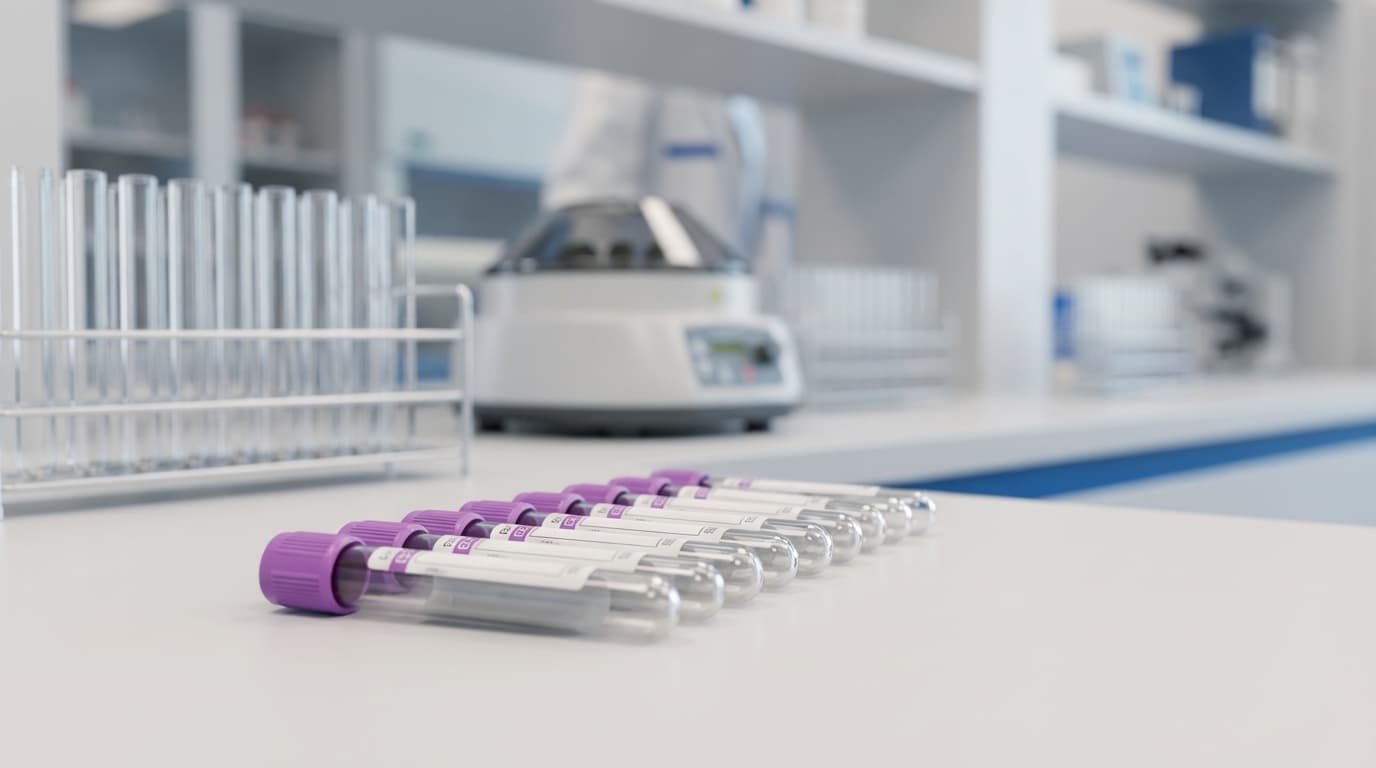
- Obtained by adding an anticoagulant (like EDTA) and centrifuging
- Contains fibrinogen and other coagulation proteins
- Cells remain intact (if processed properly)
Serum:
- The liquid portion of blood after clotting factors have been consumed
- Obtained by allowing blood to clot, then centrifuging
- Lacks fibrinogen (converted to fibrin in the clot)
- The clotting process has already occurred in the tube
For most chemistry tests, this distinction doesn't matter much. Potassium is potassium whether it's in serum or plasma. But for cfDNA, the distinction is everything.
The Physiology of Clotting: A Violent Process
To understand why serum fails for cfDNA, we have to appreciate what happens during clot formation. Clotting is not a gentle process—it's a coordinated cascade of cellular activation and physical entrapment.
Step 1: Platelet Activation
When blood contacts the tube surface (or tissue factor in vivo), platelets become activated: - They change shape from smooth discs to spiky spheres - They aggregate together, forming clumps - They degranulate, releasing their contentsStep 2: The Fibrin Mesh
The coagulation cascade generates thrombin, which converts soluble fibrinogen into insoluble fibrin strands. These strands form a mesh that traps blood cells.Step 3: Clot Retraction
Once formed, the clot contracts over time. Platelets pull on the fibrin strands, squeezing the clot tighter. This retraction expels serum from the clot.Step 4: Cellular Destruction
Here's the critical issue: white blood cells (WBCs) become trapped in the fibrin mesh. As the clot retracts and contracts, these cells are physically crushed, sheared, or otherwise damaged. Many undergo lysis (rupture).The Genomic Explosion
When a white blood cell lyses, it releases its entire genome—approximately 6 picograms of DNA per cell—into the surrounding fluid.
The Math of Contamination
Consider what's happening in a standard blood tube:
- A dog has roughly 5,000-15,000 white blood cells per microliter of blood
- A 5 mL blood sample contains approximately 25-75 million WBCs
- If even 1% of those cells lyse during clotting, that's 250,000-750,000 cells releasing their DNA
- Each cell releases ~6 picograms of DNA
- Total contamination: 1.5-4.5 micrograms of genomic DNA
Compare this to the true cfDNA level in a healthy dog: approximately 0.5-1.0 nanograms per milliliter, or roughly 2.5-5.0 nanograms in a 5 mL sample.
The contamination from just 1% WBC lysis is 300-1,000 times higher than the true cfDNA signal.
The Comparison
| Sample Type | DNA Source | What You're Measuring |
|-------------|------------|----------------------|
| Plasma (EDTA) | Only cfDNA naturally released by the body | True physiological cfDNA |
| Serum (Clot) | cfDNA + massive genomic DNA from lysed cells | Mostly artifact |
The Data: Paired Comparisons
Multiple validation studies in veterinary medicine have compared paired samples (serum vs. plasma) collected simultaneously from the same patient.
Typical findings:
- Healthy Dog Plasma: ~0.5-1.0 ng/mL
- Healthy Dog Serum: ~5.0-20.0 ng/mL (or higher)
- Fold Increase in Serum: 5x to 40x higher than plasma
This is not inter-animal variation. This is the same blood, from the same patient, at the same time. The only difference is whether the blood was allowed to clot.
Clinical Consequences
The False Negative Trap
Paradoxically, while serum has more total DNA, it leads to false negatives for cancer detection. Here's why:
Imagine a dog with early-stage cancer. The tumor is shedding circulating tumor DNA (ctDNA), but in small amounts—perhaps 0.1% of the total cfDNA.
In Plasma:
- Total cfDNA: 1.0 ng/mL
- Tumor fraction: 0.1% = 0.001 ng/mL of ctDNA
- Signal-to-noise: The test can detect this
In Serum:
- Total DNA: 20 ng/mL (mostly from lysed WBCs)
- True cfDNA: Still ~1.0 ng/mL
- Tumor fraction of total: 0.001/20 = 0.005% = buried in noise
- Result: Tumor DNA is present but undetectable above the genomic contamination
The Interpretation Problem
If you send serum to a lab for cancer screening:
- The "total cfDNA" will be high, but it's meaningless—it's mostly contamination
- Mutation detection sensitivity plummets because the tumor DNA is diluted by genomic DNA
- Any result is uninterpretable because you don't know how much of the signal is real versus artifact
It is like trying to hear a whisper at a rock concert—the background noise completely overwhelms the signal you're trying to detect.
Exceptions and Edge Cases
Is There Ever a Time to Use Serum?
For cfDNA/Liquid Biopsy: Never. There is no exception.
For Other Molecular Tests: Sometimes labs specifically request serum for certain applications:
- Some infectious disease PCRs: For Leptospirosis or certain viral PCRs, labs may use serum because they're looking for pathogen DNA, not host cfDNA. If the organism load is high, it may survive the noise. But this is pathogen-specific testing, not liquid biopsy.
- Antibody testing: Serology tests measure antibodies, not DNA, so serum is appropriate.
The Rule: If the test is measuring host cell-free DNA for any purpose, use plasma.
Preventing Errors in Your Clinic
Staff Education
This is such a common error that it warrants specific training:
1. Label protocols clearly: Put "EDTA/Purple Top ONLY" on any requisition forms for cfDNA testing
2. Train the whole team: Technicians, assistants, and front desk staff who might pull tubes for a draw
3. Explain the why: People follow protocols better when they understand the reasoning
What If Blood Clots in an EDTA Tube?
Sometimes, despite your best efforts, blood clots in an EDTA tube:
- Insufficient EDTA (short draw with too little anticoagulant)
- Delayed mixing after collection
- Prolonged transport time
If you see a clot in an EDTA tube: Reject the sample and redraw. The clotting process, even in an EDTA tube, has already damaged cells and released genomic DNA. The sample is not salvageable.
Quality Control Questions
Before processing any sample for cfDNA, check:
- ☐ Was an EDTA (purple top) tube used?
- ☐ Is the blood fully liquid (no visible clots)?
- ☐ Was the sample processed within the time window?
Summary: The Non-Negotiable Rule
| Parameter | Plasma (EDTA) | Serum (Red Top) |
|-----------|---------------|------------------|
| Clotting | Prevented | Required |
| Cell Lysis | Minimal | Extensive |
| DNA Contamination | Low | Massive (5-40x) |
| cfDNA Accuracy | Accurate | Useless |
| Liquid Biopsy Use | YES | NEVER |
If your technician asks, "Red top or purple top?" the answer for cfDNA is always, without exception: Purple (EDTA).
If the blood clots, the sample is lost. Redraw.