The 4-Hour Rule: The Biology Behind the Clock
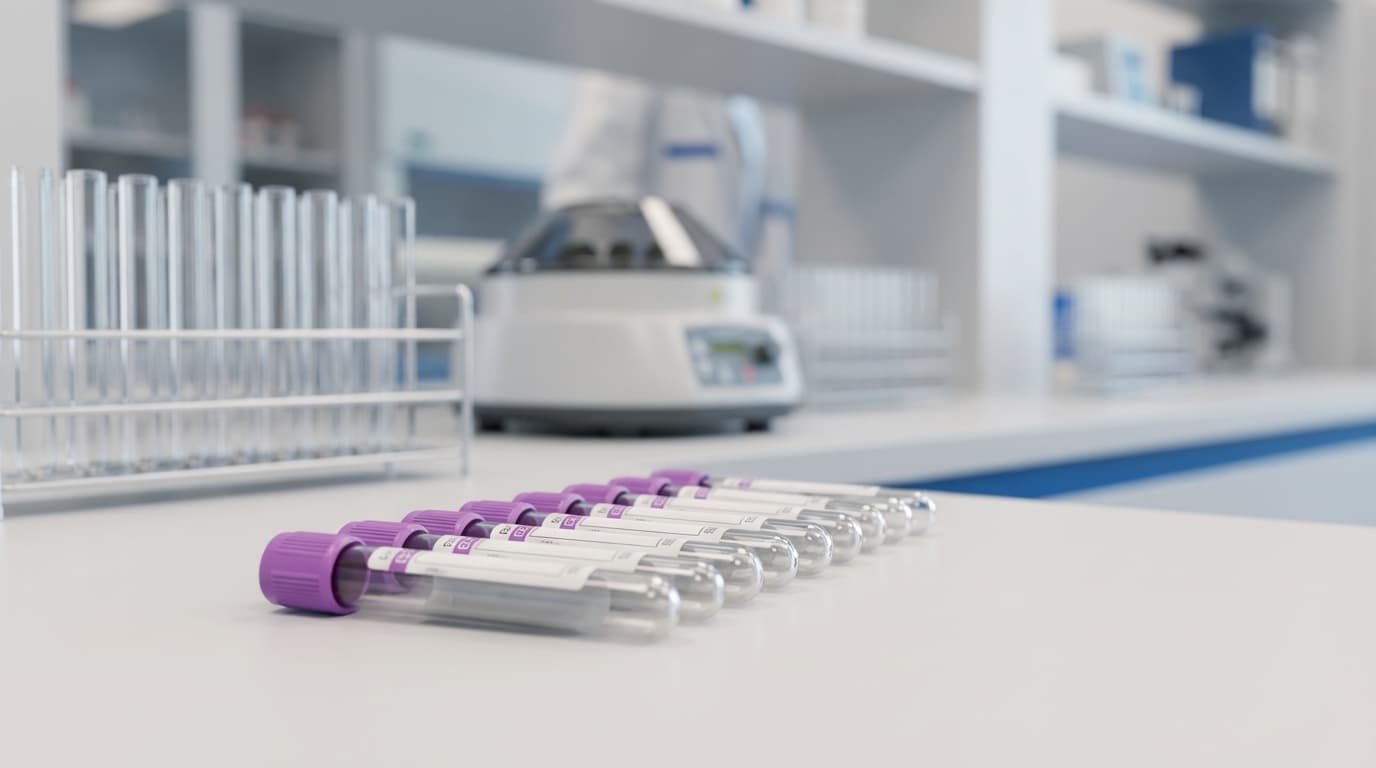
Why do samples degrade after 4 hours? It's not just 'aging'—it's a biological cascade of glucose depletion and white blood cell suicide.
The 4-Hour Rule: The Biology Behind the Clock
We have established that cfDNA samples in standard EDTA tubes must be processed within 4 hours. You will see this rule stated in every liquid biopsy protocol, every sample submission guideline, every technical bulletin.
But why 4 hours specifically? Why not 6 hours? Why not 12? Is this just an overly conservative safety margin, or is there real science behind the number?
The answer is that the 4-hour rule is not an arbitrary administrative guideline. It is based on the metabolic biology of white blood cells in a test tube—and the predictable cascade of events that occurs when those cells run out of fuel.
Understanding What's Happening in the Tube
When you draw blood into an EDTA tube, you are creating a closed ecosystem. The cells are still alive. They have no idea they've left the body. They continue doing what cells do: metabolizing nutrients, maintaining their membranes, and carrying out their programmed functions.
But unlike in the body, where the blood continuously circulates past the lungs (for oxygen) and the liver (for nutrients), the cells in your tube have only the resources that came with them at the moment of collection. There's no resupply.
This creates a ticking clock.
Phase 1: The Stable Window (0–2 Hours)
What's Happening
In the first two hours after collection, the cells are essentially fine:
- Glucose is available: The plasma contains glucose, and cells are metabolizing it normally
- ATP production continues: Cells are generating the energy they need to maintain membrane integrity
- Membrane pumps work: The Na+/K+-ATPase pumps that keep ions balanced and membranes stable are fully functional
- Cells remain intact: No significant lysis is occurring
The cfDNA Status
During this window, the cfDNA in the plasma accurately reflects what was circulating in the patient at the time of collection. This is the true physiological signal—the measurement you want.
Clinical Implication
This is the ideal processing window. If you can spin and separate plasma within 2 hours, you will get the most accurate results.
Phase 2: Metabolic Stress (2–4 Hours)
What's Happening
By the 2-4 hour mark, resources are depleting:
- Glucose runs low: The cells have consumed much of the available glucose
- Lactate accumulates: Anaerobic metabolism produces lactate, lowering pH
- ATP production falters: With less substrate, energy production slows
- Membrane pumps struggle: ATP-dependent pumps become less efficient
- Neutrophils become fragile: Neutrophils are particularly sensitive and begin showing stress
The Cellular Stress Response
Cells under metabolic stress don't just passively deteriorate—they actively respond. Neutrophils in particular can become "primed" or activated, changing their behavior in ways that affect sample quality.
The cfDNA Status
Some DNA may begin leaking from stressed cells, but massive contamination hasn't occurred yet. The sample is in a danger zone but may still be salvageable.
Clinical Implication
Process as soon as possible. The sample is not yet ruined, but every additional minute increases risk. Don't delay further.
Phase 3: The Tipping Point (>4 Hours)
What's Happening
After 4 hours, the cells reach a critical threshold:
- Energy depletion is severe: ATP levels are critically low
- Membrane integrity fails: Without ATP, ion pumps stop working
- Cells swell: Sodium and water enter, potassium leaks out
- Apoptosis initiates: Some cells begin programmed death pathways
- Necrosis occurs: Other cells simply rupture from osmotic stress
The Lysis Cascade
When a white blood cell lyses, it releases its entire genomic content into the plasma:
- DNA content: A single WBC contains approximately 6 picograms of nuclear DNA
- WBC count: A normal dog has 5,000-15,000 WBCs per microliter of blood
- A 5 mL sample contains: Approximately 25-75 million WBCs
If just 1% of those cells lyse (a conservative estimate for delayed samples), that's 250,000-750,000 cells releasing their DNA.
The math:
- 500,000 lysed cells × 6 picograms = 3,000,000 picograms = 3,000 nanograms of genomic DNA
- Normal cfDNA in 5 mL: approximately 2.5-5 nanograms
- Contamination exceeds true signal by 600-1,200 fold
The cfDNA Status
The sample is flooded with genomic DNA from lysed cells. The original cfDNA signal—including any tumor DNA—is completely drowned out.
Why This Matters: The Signal-to-Noise Catastrophe
Tumor Detection Example
Imagine you are looking for circulating tumor DNA (ctDNA) present at 10 copies per milliliter of plasma.
At 1 Hour (Fresh Sample):
- Background normal cfDNA: ~1,000 copies/mL
- Tumor DNA: 10 copies/mL
- Tumor fraction: 1%
- Detection: POSSIBLE ✅
At 6 Hours (Delayed Sample):
- Background DNA: Exploded to 100,000+ copies/mL due to WBC lysis
- Tumor DNA: Still 10 copies/mL (hasn't changed)
- Tumor fraction: 0.01%
- Detection: IMPOSSIBLE ❌ (Below limit of detection)
The tumor DNA is still there. It hasn't gone anywhere. But it's now invisible—statistically undetectable against the massive background noise.
The False Negative Consequence
This delayed sample will return a result of "No Tumor DNA Detected." The clinician concludes the dog is cancer-free. The owner is relieved.
But the cancer is there. The test failed not because the technology doesn't work, but because the sample was compromised before it ever reached the analyzer.
Why Can't We Just "Correct" for Delay?
You might wonder: if we know delayed samples have higher cfDNA, can't we just adjust the threshold?
No, for several reasons:
1. Unpredictable contamination: The degree of lysis varies based on temperature, handling, cell counts, and other factors. You can't reliably predict how much contamination occurred.
2. Signal destruction, not just elevation: The problem isn't just that total DNA is higher—it's that the tumor signal is diluted below detection. No mathematical correction can recover a signal that's been drowned out.
3. Mutation masking: For mutation detection, the wild-type genomic DNA from lysed cells competes with mutant tumor DNA during PCR amplification. The tumor signal gets outcompeted.
Temperature Matters Too
The 4-hour timeline assumes room temperature storage. Temperature modifies the timeline:
Colder temperatures (4°C, refrigerator):
- Slows metabolism, extending the window slightly
- But also causes other issues (cold activation of cells, membrane changes)
- Not a reliable solution
Warmer temperatures (>25°C):
- Accelerates metabolism and lysis
- Shortens the stable window
- A tube left in a hot car may be compromised in 1-2 hours
Practical Implementation
Workflow Recommendations
Ideal: Process within 2 hours of collection
Acceptable: Process within 4 hours if 2 hours is not feasible
Unacceptable: Any sample processed after 4 hours in a standard EDTA tube
Time Documentation
Every cfDNA sample should have documented:
- Time of blood draw (on the tube label)
- Time of centrifugation (in lab records)
- Time from draw to plasma separation
This documentation is essential for quality assurance and for troubleshooting unexpected results.
When 4 Hours Is Impossible
If you cannot process within 4 hours (mobile practice, after-hours draw, remote location), you have two options:
1. Use stabilization tubes (Streck, PAXgene): These contain preservatives that extend stability to 7-14 days
2. Don't collect the sample: Better to reschedule than to waste the test and potentially miss a diagnosis
Summary: The Biological Hard Stop
| Time Window | Cell Status | cfDNA Status | Action |
|-------------|-------------|--------------|--------|
| 0-2 hours | Stable | Accurate | ✅ Ideal—process now |
| 2-4 hours | Stressed | At risk | ⚠️ Process immediately |
| >4 hours | Lysing/dead | Contaminated | ❌ Reject sample |
The 4-hour rule is a biological hard stop, not a suggestion. You cannot "fix" a sample processed at 8 hours. You cannot mathematically correct for contamination you can't quantify. The noise has already drowned out the signal.
Respect the clock. It's based on cell biology, not bureaucracy.